A locally grounded guide to Tanzania’s dry season, green season, calving period and Great Migration planning—without pretending wildlife follows a fixed timetable.
There is no single best month for every Tanzania safari. The right time depends on what you most want to experience: concentrated dry-season wildlife, southern Serengeti calving, quieter green landscapes, birdlife, photography, or a safari-and-Zanzibar combination. The most useful approach is to match the season to your priorities rather than choose a date from a generic calendar.
The short answer
June to October is the classic dry-season window across much of northern Tanzania. Days are generally dry, vegetation becomes less dense, and animals often gather around dependable water. This can make wildlife viewing easier, but it is also a popular period and well-positioned camps can fill early.
January to March is especially rewarding when a journey is built around the southern Serengeti and Ndutu area. The short-grass plains can support large migratory herds and newborn wildebeest, with predators following the concentration of prey. Rainfall and herd movements vary, so exact locations must be checked close to travel.
November, December and parts of the longer-rain period can offer greener scenery, dramatic skies, active birdlife and fewer vehicles. Rain rarely means that every day is lost, but road conditions and wildlife distribution can change. A flexible route and well-chosen accommodation matter more in these months.
January to March: calving landscapes and predator activity
Early in the year, migration-focused safaris usually look toward the southern Serengeti ecosystem and the Ndutu plains. The attraction is not simply the possibility of seeing newborn animals. It is the wider ecological story: nutritious short grass, large concentrations of grazers and the predators that respond to them.
This period suits travelers who enjoy wildlife behavior, open landscapes and photography. It is important to allow enough time in the relevant area. A rushed itinerary that visits too many parks can reduce the chance to respond to current herd reports.
- Best suited to migration-focused travelers and wildlife photographers
- Plan several nights in the southern Serengeti or Ndutu area
- Expect warm days and the possibility of showers
- Treat calving and predator sightings as natural events, never guarantees
April and May: green season with space to breathe
The longer rains usually influence April and May, although timing and intensity vary. These months can bring lush scenery, softer light and quieter safari areas. Some seasonal camps close and certain tracks can become difficult, so the route needs careful operational planning.
For travelers comfortable with changing weather, the green season can feel wonderfully spacious. It can also be attractive for repeat safari guests who value atmosphere and photography over a checklist. The best itinerary concentrates on areas with reliable access and avoids unnecessary long driving days.
June to October: the classic dry-season safari
As landscapes dry, wildlife often becomes easier to locate around rivers, springs and permanent water. Tarangire is particularly known for its dry-season wildlife concentrations, while Serengeti, Ngorongoro and Lake Manyara can be combined into a strong northern-circuit journey.
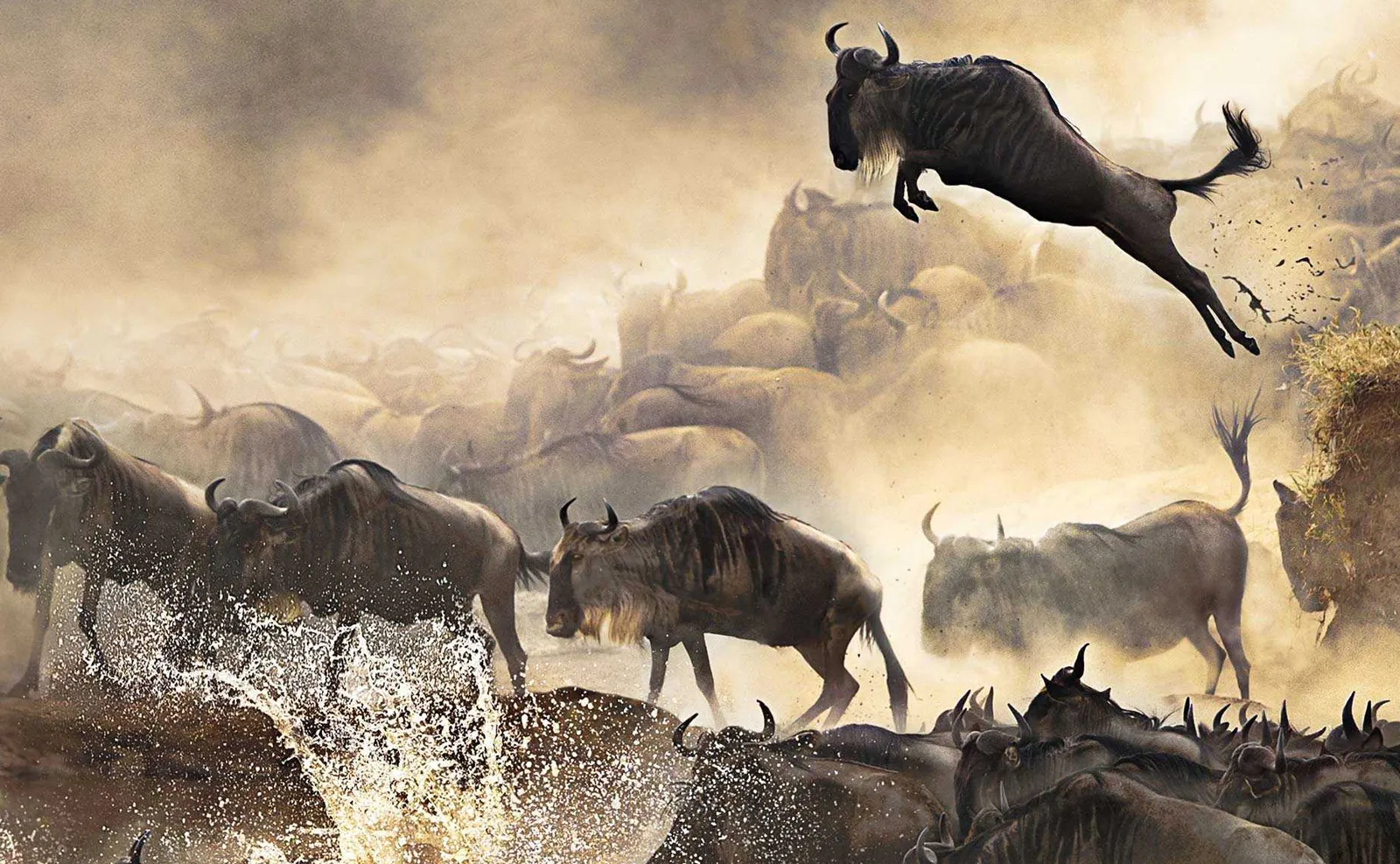
Migration travelers often look toward the western and northern Serengeti as the season progresses. However, river crossings cannot be scheduled like a performance. Herds may wait, cross suddenly, turn back or use an unexpected point. The better plan is to spend meaningful time in the right general region and enjoy the full ecosystem rather than make one crossing the only measure of success.
- Best suited to first-time safari travelers and families seeking generally drier conditions
- Reserve early for July, August, September and festive periods
- Include warm layers for cool mornings and crater-rim evenings
- Build realistic travel time between parks
November and December: short rains and renewed landscapes
The short rains often begin during this period, refreshing grazing areas and changing wildlife distribution. These months can combine vivid scenery with fewer vehicles than the busiest dry-season weeks. Migratory birds add another layer of interest, while intermittent rain can create dramatic skies.
December holiday dates remain popular, so quieter landscapes do not always mean last-minute lodge availability. Travelers should distinguish between the seasonal character of a month and the demand around specific festive dates.
What Great Migration timing really means
The Great Migration is a continuous movement through the Serengeti–Mara ecosystem, influenced mainly by rainfall and fresh grazing. It is not one event in one place. A useful migration plan identifies the region where herds are commonly found during a travel window, then allows enough time and flexibility to respond to actual conditions.
No ethical operator can guarantee a Mara River crossing, a hunt, a birth or any specific wildlife sighting. Seasonal maps are planning tools, not promises. Current guide reports and rainfall patterns remain essential.
Choose the season around your priorities
- For a classic first safari: consider June to October
- For southern Serengeti calving landscapes: consider January to March
- For greener scenery and fewer vehicles: consider parts of November to May
- For birding: green and shoulder seasons can be especially rewarding
- For combining safari with Zanzibar: compare both safari conditions and your preferred beach weather
- For photography: prioritize time, light and guide flexibility over the number of parks
Our planning view
Start with the experience you value most, then choose the route and dates. A well-paced seven-day safari in the correct region is usually more rewarding than a rushed itinerary that tries to cover every headline destination. Share your dates, interests and comfort preferences with our Arusha team, and we can explain the trade-offs honestly before proposing a route.
Seasonal patterns in this guide reflect long-term regional behavior and official destination guidance. Weather and wildlife remain natural and variable, so every itinerary requires confirmation against current conditions and availability.
Locally publishedPrepared by the Africano Paraiso team in Arusha, Tanzania.