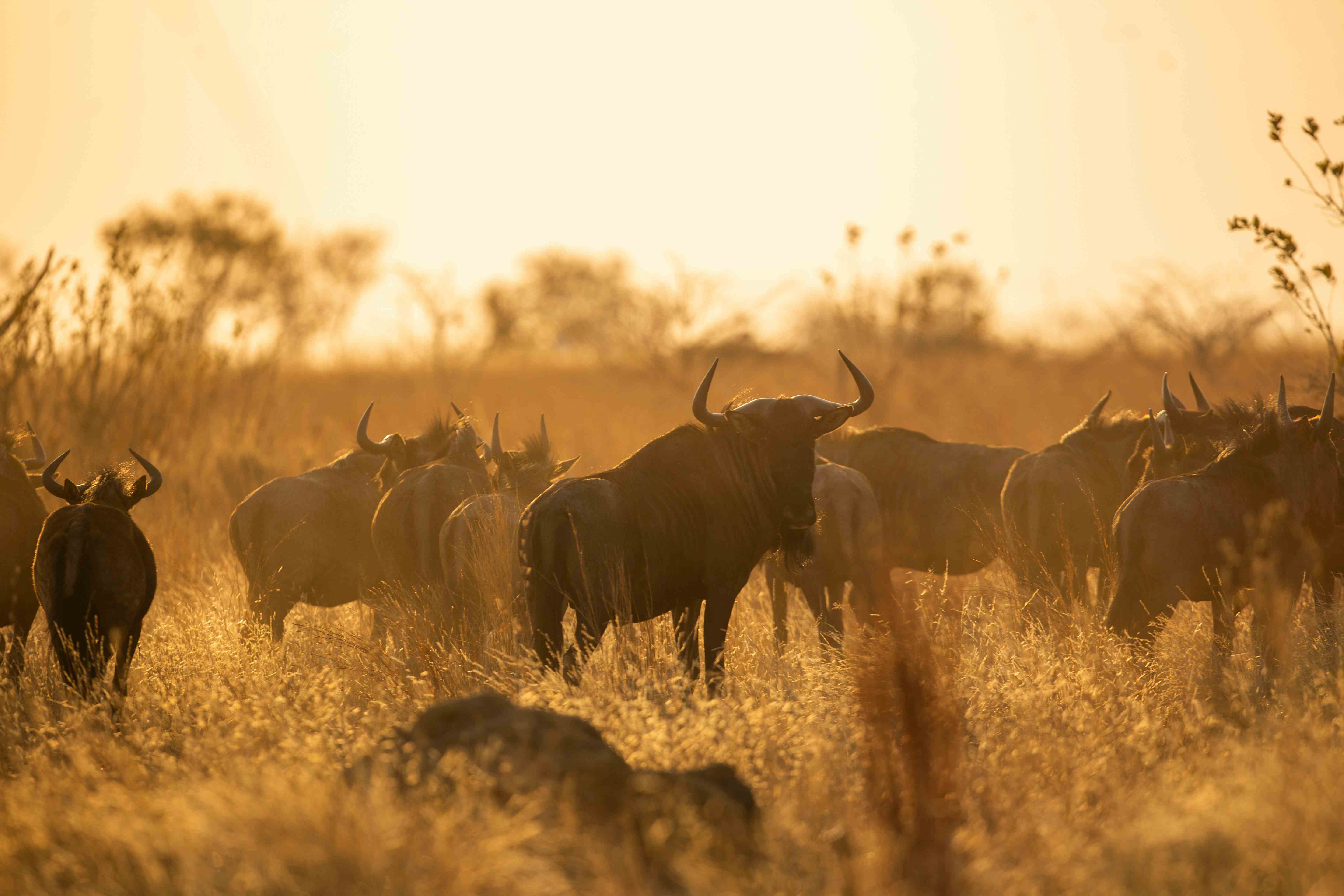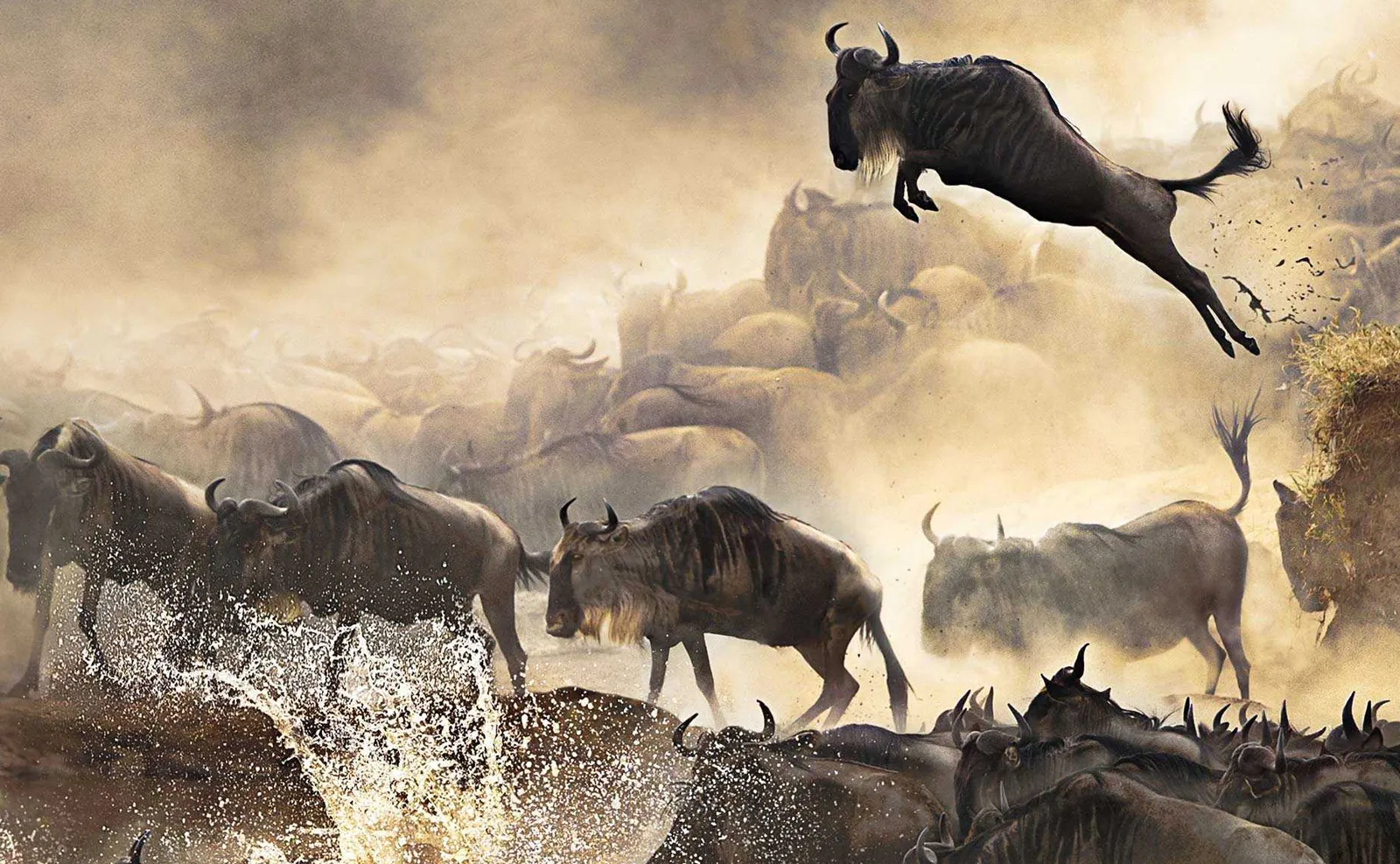
Follow the Great Migration’s typical seasonal movement through the southern, western and northern Serengeti—and understand why nature never follows a fixed timetable.
The Great Migration is a continuous annual movement through the Serengeti–Mara ecosystem, not a single event or one guaranteed river crossing. Wildebeest, zebra and other grazers respond to rainfall, fresh grass and available water. Their timing and exact location can shift from one year to another.
A month-by-month guide is therefore a planning framework, not a promise. The best safari combines the most suitable Serengeti region for your dates with enough nights, flexible guiding and an appreciation of the entire ecosystem.
Great Migration calendar at a glance
- January to March: southern Serengeti and Ndutu short-grass plains; calving period
- April to May: herds commonly spread west and northwest as the long rains influence grazing
- June: western corridor and transitional movement toward the north
- July: western and northern Serengeti; river activity may begin
- August to October: northern Serengeti and the wider Mara ecosystem; Mara crossings may occur
- November to December: movement often returns through the east toward the southern plains
Rain can move this pattern forward, delay it or spread the herds across several areas. No ethical operator can guarantee a crossing, birth, hunt or precise herd location.
January: herds gather on the southern plains
January commonly finds substantial herds across the southern Serengeti ecosystem, including the Ndutu area and nearby short-grass plains. Fresh grazing can produce wide concentrations, although early or uneven rain may distribute animals across a large zone.
This is a strong month for open landscapes, herd behavior and the build-up to peak calving. A migration-focused itinerary should use accommodation positioned for the south rather than treating central Serengeti as interchangeable.
February: the heart of the calving period
February is widely associated with wildebeest calving on the nutrient-rich southern plains. TANAPA’s Serengeti material notes that most calves are born during a concentrated period around mid-February, but an individual safari cannot guarantee witnessing a birth.
The value of this season extends beyond newborn animals. Large prey concentrations can create intense predator activity and fascinating herd behavior. Spend several nights in the south and allow the guide to respond to current reports rather than racing between distant parks.
March: young calves and changing movement
Many herds can remain in the southern ecosystem during March while calves gain strength. As rainfall and grazing change, groups may begin spreading westward or northward. The landscape is often green, with dramatic skies and strong photographic conditions.
Late March can become less predictable than the popular calendar suggests. Accommodation location and current road access matter, particularly when rain affects seasonal tracks.
April: green season and wider distribution
April normally falls within the longer-rain period. Herds may move through central and western parts of the ecosystem, but they can be widely dispersed. Some seasonal camps close, roads may become slower and daily plans require flexibility.
For travelers who accept variable weather, April can offer lush scenery, fewer vehicles and excellent atmosphere. It is better suited to patient safari travelers than anyone treating one headline sighting as the only goal.
May: movement toward the western corridor
During May, migration planning increasingly considers the central and western Serengeti as animals follow changing grazing. Long columns may form, but rainfall determines how quickly and along which path the movement develops.
The transition can be visually impressive even without a river crossing. Herds walking across open country, rutting behavior and predator interactions can make the wider migration story more meaningful than one dramatic moment.
June: western corridor and a transition north
June commonly brings the herds into or through the western corridor, where Grumeti River activity may occur. These crossings differ from the steep-bank Mara River scenes seen in many documentaries, and timing remains uncertain.
As the dry season develops, groups may continue north. An itinerary built for early June may need a different accommodation strategy from one at the end of the month. Current guide reports become especially valuable during this transition.
July: western and northern Serengeti
July can see migration activity across western, central and northern sectors as the herds continue toward the Mara River. Some groups may reach northern Serengeti while others remain farther south.
Do not assume that booking one night near a crossing point creates a river-crossing safari. The northern Serengeti is a large, rewarding wildlife destination in its own right, and meaningful time there gives the guide room to work with natural movement.
August: classic northern Serengeti planning
August is one of the principal months for northern Serengeti migration safaris. Herds may gather near the Mara River or move between Tanzania and Kenya. Crossings can happen suddenly, at different points or not at all during a particular stay.
Demand is high, so well-positioned camps and flights often need early reservation. Plan several nights in the north and judge the safari by the complete wildlife experience—not only whether a crossing happens in front of the vehicle.
September: northern herds and river possibilities
September often remains strong for northern Serengeti. Some herds may be north of the border while others remain or return to Tanzania. The Mara River does not form a one-way gate; animals can cross in either direction and repeat the process.
Dry conditions can also support broader wildlife viewing. Resident cats, elephants, giraffes and plains game make the region worthwhile even when migratory herds are not at a convenient crossing point.
October: late northern season and movement east
Migration groups may remain in the north during October, while others begin moving toward northeastern and eastern areas as short rains approach. Exact timing is sensitive to rainfall, so the month can behave differently from year to year.
Travelers should compare early- and late-October expectations rather than treating the whole month as one fixed season. A flexible route may combine northern and central Serengeti depending on current conditions.
November: short rains reshape the route
The short rains often encourage renewed grazing in eastern and southern parts of the ecosystem. Herds may move quickly, and the dramatic change in distribution can make fixed hotel locations less responsive than carefully selected mobile or seasonal camps.
November can offer greener scenery and fewer vehicles than peak dry-season dates. Rainfall is variable, so itineraries should protect access and avoid overpromising the exact location of the migration.
December: returning toward the southern ecosystem
By December, migration planning often looks toward eastern Serengeti, the southern plains and Ndutu as herds prepare for the next calving cycle. Holiday demand can still make popular properties busy despite the green-season character.
The exact return route depends on where useful rain has fallen. A local planning team should confirm recent movement before final accommodation choices are locked.
How many nights should you allow?
For a migration-focused region, three or four nights is a practical starting point. One night provides little time after transfers and cannot absorb weather, distance or the animals’ changing direction. Photographers and travelers with one seasonal priority often benefit from even longer.
Read our guide to how many days you need for a Tanzania safari before comparing itineraries. The printed number of days matters less than the nights spent in the correct region.
River crossings cannot be scheduled
Animals may gather at a riverbank for hours and turn away. They may cross early, after the vehicle leaves, at another point or outside the dates predicted by a seasonal chart. Responsible guides keep a respectful distance and follow TANAPA’s crossing rules rather than pressuring the animals for a photograph.
Choose a migration safari because the whole ecosystem interests you. A crossing is an extraordinary possibility, never an appointment.
Choosing the right migration itinerary
- Match accommodation to the likely region for the exact dates
- Allow at least three nights around the main migration focus
- Avoid long transfers that remove full game-drive time
- Use current guide reports alongside the seasonal pattern
- Consider a flight when it protects meaningful time in a remote Serengeti region
- Ask the operator to explain what happens if the herds move early or late
- Never accept a guaranteed river crossing or guaranteed wildlife claim
Compare our Great Migration safari itineraries and upcoming group departures as planning examples. Final routes should always be checked against the season, current camp availability and recent conditions.
Official reference material
TANAPA Serengeti National Park overview and migration map: https://www.tanzaniaparks.go.tz/uploads/publications/en-1634493627-SE-ENG.pdf
TANAPA Mara River crossing guidelines: https://www.tanzaniaparks.go.tz/uploads/publications/en-1724693797-MararivercrossingGuideline.pdf
Official Tanzania Tourism Board Serengeti page: https://www.tanzaniatourism.go.tz/destination/serengeti/
Final answer
January to March usually favors the southern plains and calving story; June and July are important transition months; August to October often favors northern Serengeti; and November to December commonly sees movement return east and south. Use those patterns to choose a region, then leave room for rainfall and wildlife to write the real itinerary.
Locally publishedPrepared by the Africano Paraiso team in Arusha, Tanzania.