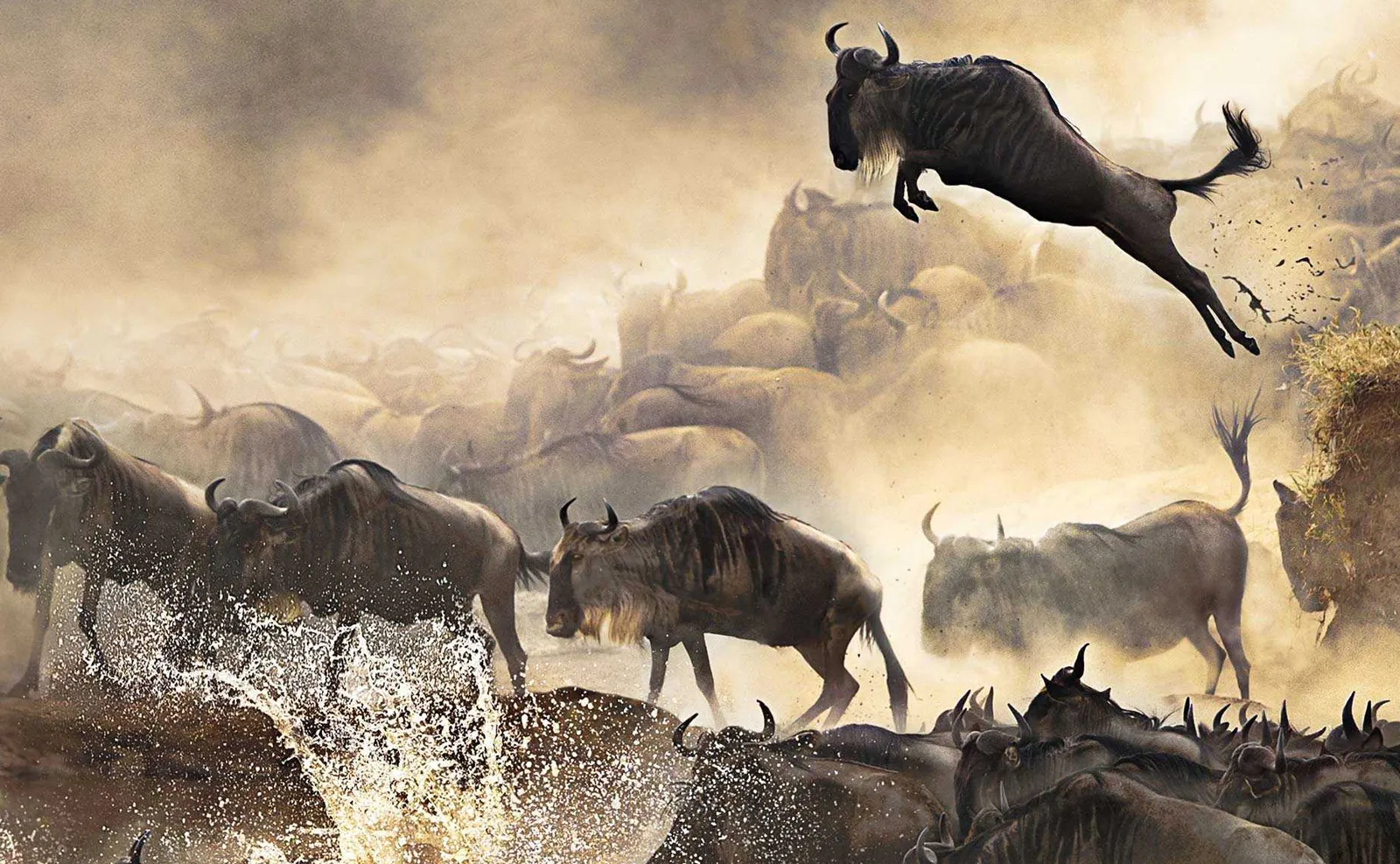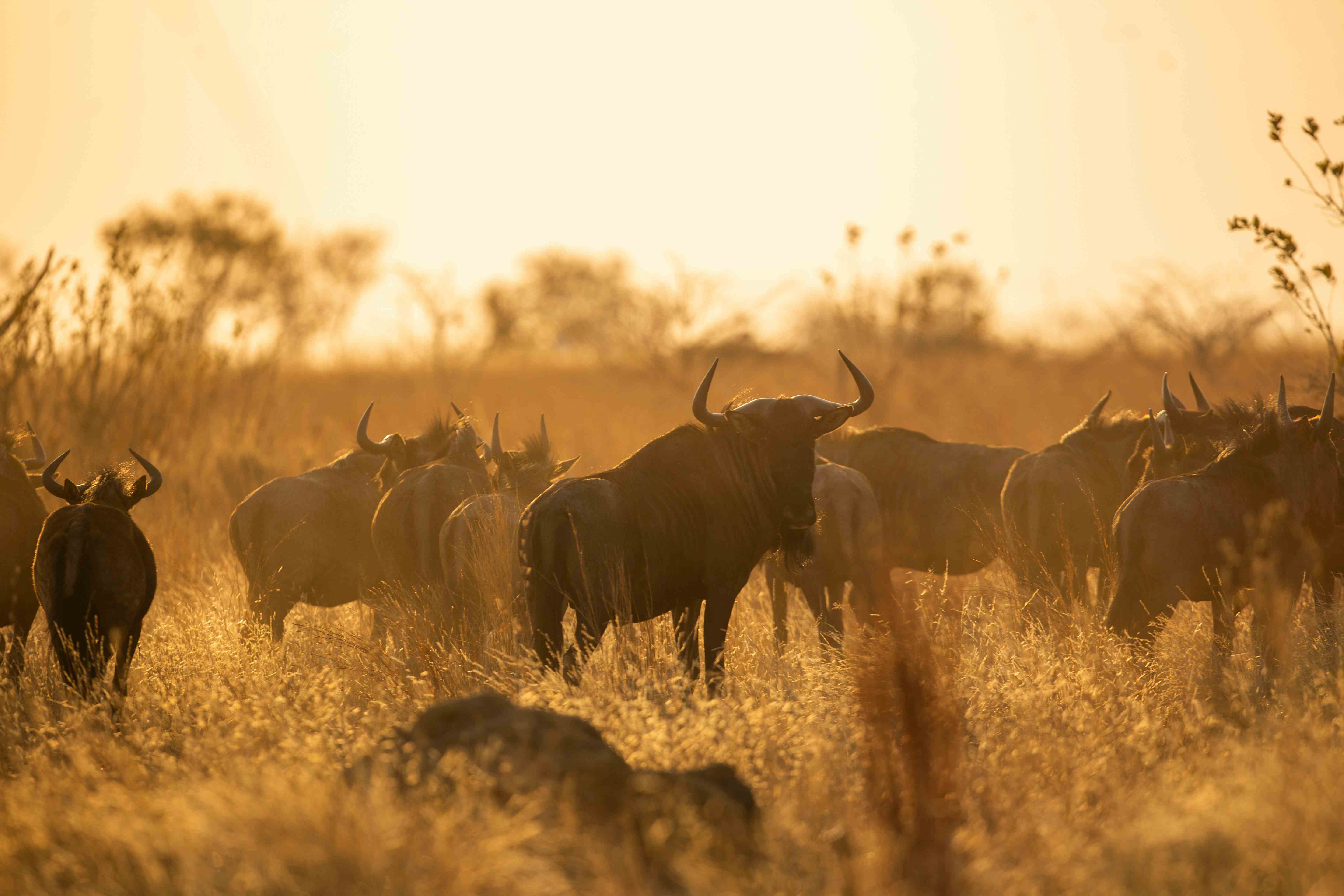
Planning a Great Migration safari in Tanzania? This guide explains realistic budget, mid-range and luxury price ranges, what affects the final cost, and how season, accommodation, group size, park fees and migration location shape your safari budget.
How Much Does a Great Migration Safari Cost in Tanzania?
A Great Migration safari in Tanzania does not have one fixed price. The final cost depends on when you travel, where the herds are likely to be, how many nights you spend in that region, your accommodation level, group size, transport strategy and whether the safari is private or shared.
Two seven-day migration safaris can therefore have very different prices.
One itinerary may concentrate on central Serengeti using comfortable mid-range camps and road transfers. Another may require seasonal accommodation in northern Serengeti, domestic flights and several nights close to the Mara River during peak demand.
The better question is not simply:
“What does a Great Migration safari cost?”
It is:
“What does the right Great Migration safari cost for my dates and travel style?”
The ranges below are intended as a planning framework rather than a guaranteed quotation.
Great Migration safari cost at a glance
As a broad planning guide, safari travelers may encounter ranges around:
- Budget or camping: approximately US$250–US$400 per person per day
- Mid-range lodge or tented camp: approximately US$400–US$700 per person per day
- Luxury: approximately US$700–US$1,200+ per person per day
These figures can move considerably depending on season, group size and itinerary.
A two-person private safari normally costs more per person than a four-person safari because vehicle, guide and some logistical costs are shared among fewer travelers.
Likewise, a safari targeting northern Serengeti during the main river-crossing period may cost more than a similar-length trip during a quieter migration period.
Why Great Migration safari prices vary so much
Migration safari pricing is closely connected to geography and season.
The herds do not remain in one place throughout the year, so a well-designed itinerary needs to position travelers in the most suitable part of the Serengeti ecosystem for their dates.
Read our Great Migration in Tanzania month-by-month guide to understand how the migration commonly moves through the ecosystem.
The following factors usually have the greatest effect on price.
1. The month you travel
Season has a major influence on both migration location and accommodation prices.
January to March
Migration-focused trips commonly concentrate on the southern Serengeti and Ndutu ecosystem, particularly during the calving period.
Seasonal camps positioned close to the southern plains can be in high demand.
April and May
The long-rain period can sometimes offer better accommodation value, but road conditions and herd distribution become more variable.
Travelers choosing this period should value flexibility rather than expecting a specific migration spectacle.
June and July
Planning increasingly shifts toward the western and northern parts of the ecosystem as the herds move north.
The correct location can change quickly during this transitional period.
August to October
Northern Serengeti is one of the highest-demand migration regions during this period because of the possibility of Mara River crossings.
Well-positioned camps can become expensive and availability may disappear months in advance.
November and December
The short rains often influence movement back toward eastern and southern parts of the ecosystem.
The exact pattern still depends on rainfall.
As with migration timing itself, pricing cannot be understood properly without considering where your safari needs to operate.
2. Accommodation location matters as much as accommodation category
A safari camp is not valuable simply because it is labelled “luxury.”
For a migration safari, location can matter even more.
A beautiful camp several hours from your main wildlife area may reduce the amount of useful game-drive time you have each day.
Accommodation options may include:
- public campsites
- private campsites
- budget tented camps
- permanent mid-range camps
- seasonal migration camps
- luxury tented camps
- high-end safari lodges
Seasonal and mobile camps can command higher prices because they are positioned specifically around wildlife movement.
That premium can sometimes represent better safari value if it saves several hours of driving each day.
3. Private safari vs shared safari
A private migration safari gives your group its own vehicle and professional guide.
This allows more flexibility with:
- departure times
- photography
- wildlife sightings
- meal timing
- game-drive duration
- route decisions
- rest stops
Private safaris are especially useful when migration activity is changing because the guide can adapt the day around current information.
However, private safaris can cost more for one or two travelers because the vehicle and guide expenses are divided between fewer people.
For three, four or more travelers, the per-person difference can become considerably smaller.
4. Park and conservation fees
Government wildlife and conservation fees form an important part of a Tanzania safari price.
A Great Migration itinerary may involve areas such as:
- Serengeti National Park
- Ngorongoro Conservation Area
- Ngorongoro Crater
- Tarangire National Park
- Lake Manyara National Park
The exact combination depends on the itinerary.
A quotation that appears unusually cheap should therefore be checked carefully to confirm whether all mandatory park and conservation fees are actually included.
5. Road safari vs fly-in safari
Driving allows travelers to experience more of northern Tanzania and can reduce flight costs.
However, Tanzania is large.
Reaching remote migration areas entirely by road may consume valuable safari time.
A domestic flight can sometimes make a more expensive itinerary better value by turning a full day of transportation into additional wildlife-viewing time.
For example, a fly-in itinerary to northern Serengeti may cost more than driving from Arusha, but it can make sense for travelers with limited days.
The decision should be based on time as well as money.
6. Number of safari days
Longer safaris naturally cost more overall, but price should not be judged only by total days.
A seven-day itinerary with four nights in the correct migration region may offer better value than an eight-day itinerary that spends much of its time transferring between distant parks.
For most migration-focused trips, five to ten days provides a useful planning range.
The appropriate duration depends on whether the migration is your only priority or part of a broader Tanzania safari.
Our guide to how many days you need for a Tanzania safari explains this in more detail.
How much might a 5-day Great Migration safari cost?
A five-day migration safari may broadly fall around:
Budget or camping
Approximately US$1,250–US$2,000 per person
Mid-range
Approximately US$2,000–US$3,500 per person
Luxury
Approximately US$3,500–US$6,000+ per person
These are planning ranges only.
Five days can work well when the itinerary focuses on the correct region rather than trying to cover too much of northern Tanzania.
A five-day migration safari should not automatically attempt Serengeti, Tarangire, Ngorongoro, Lake Manyara and multiple migration areas simply because they can be placed on a map.
Too much movement can reduce the quality of the safari.
How much might a 7-day Great Migration safari cost?
A seven-day safari may broadly fall around:
Budget or camping
Approximately US$1,750–US$2,800 per person
Mid-range
Approximately US$2,800–US$4,900 per person
Luxury
Approximately US$4,900–US$8,400+ per person
Seven days gives more flexibility to combine a migration-focused Serengeti stay with places such as Ngorongoro Crater or Tarangire.
But the itinerary should still protect enough nights in the migration region.
How much might a 10-day Great Migration safari cost?
A longer itinerary gives travelers the opportunity to explore the wider northern circuit without sacrificing migration time.
Very broadly, ten-day safaris might begin around:
Budget or camping
Approximately US$2,500–US$4,000 per person
Mid-range
Approximately US$4,000–US$7,000 per person
Luxury
Approximately US$7,000–US$12,000+ per person
Again, these are not quotations.
Luxury camps, fly-in arrangements, private concessions, upgraded rooms and peak-season availability can push prices significantly higher.
What should normally be included in the safari price?
A properly prepared safari quotation should clearly state what is included.
Depending on the itinerary, this commonly includes:
- safari vehicle
- professional driver-guide
- accommodation
- meals specified in the itinerary
- national park entry fees
- conservation fees
- scheduled game drives
- drinking water during safari
- airport or hotel transfers where included
- applicable government taxes
Some itineraries may also include domestic flights.
Travelers should check separately for items such as:
- international flights
- visas
- travel insurance
- tips
- alcoholic drinks
- laundry
- optional activities
- balloon safaris
- personal expenses
- additional nights before or after safari
Do not compare two safari prices until you have compared what each quotation actually includes.
Is the cheapest Great Migration safari the best deal?
Usually not.
A lower price may sometimes reflect genuine value.
But it can also result from:
- accommodation far from the migration area
- fewer nights in Serengeti
- excessive road transfers
- lower-quality vehicles
- fewer included fees
- shared rather than private arrangements
- camps outside the most useful locations
- unrealistic itinerary pacing
For a migration safari, where your nights are spent can be more important than how many days appear on the itinerary title.
Saving several hundred dollars but losing hours of useful game-drive time every day may not represent good value.
Is a private Great Migration safari worth the extra cost?
For many travelers, yes.
The benefit becomes especially clear when wildlife movement is unpredictable.
A private guide can respond to recent information, stay longer at a sighting or change the day's focus without needing agreement from unrelated travelers.
Private safaris are particularly useful for:
- photographers
- honeymooners
- families
- birders
- repeat safari travelers
- travelers with mobility considerations
- guests with a strong migration priority
But travelers primarily concerned with price may find a small shared safari perfectly suitable.
There is no universally correct choice.
How can you reduce the cost without weakening the safari?
A cheaper safari does not necessarily require cutting the days that matter most.
Better options can include:
- traveling with three or four people
- choosing well-located mid-range camps
- avoiding unnecessary luxury upgrades
- traveling outside the most expensive peak dates
- reducing unnecessary transfers
- concentrating on fewer parks
- booking early for high-demand periods
- using domestic flights selectively rather than automatically
- spending money on location rather than decorative luxury
One of the biggest mistakes is trying to visit too many destinations because it makes an itinerary appear better value.
A focused safari often produces a better wildlife experience.
Is the Mara River crossing season more expensive?
Often, yes.
Northern Serengeti accommodation experiences strong demand during the main river-crossing season.
Camps positioned near areas such as Kogatende may sell out well in advance.
But paying more does not guarantee a river crossing.
Wildebeest may gather at the Mara River and turn away. They may cross at another location, cross before your arrival or remain away from the river during your stay.
No responsible operator should sell a river crossing as a scheduled event.
Our upcoming guide to the best months for Mara River crossings in Tanzania will explain this season in more detail.
Is the Ndutu calving season expensive?
Ndutu can also experience high demand during the main calving period.
Travelers are drawn not only by newborn wildebeest but also by the predator activity associated with large concentrations of prey.
Well-positioned seasonal camps can therefore command higher rates during this period.
The value of an Ndutu safari should be judged by the entire ecosystem experience rather than the promise of witnessing an actual birth.
Our Ndutu calving season guide will cover this period separately.
When should you book a Great Migration safari?
For northern Serengeti during the main river-crossing period, early planning is strongly recommended.
The same applies to popular Ndutu camps during calving season.
Travelers seeking specific camps, family rooms or premium accommodation should normally plan earlier than travelers who are flexible about where they stay.
Last-minute migration safaris can still be possible, but the itinerary may need to follow remaining availability rather than the ideal route.
How to compare Great Migration safari quotations
Do not compare only the final dollar amount.
Ask:
- How many nights are actually inside Serengeti?
- Which Serengeti region are those nights in?
- How far is the accommodation from the likely migration area?
- Is the safari private or shared?
- Which park fees are included?
- Are airport transfers included?
- Are domestic flights included?
- Is the vehicle dedicated to your group?
- What happens if the migration is earlier or later than expected?
- Does the route involve unnecessarily long transfers?
A cheaper quotation with poor positioning can become an expensive disappointment.
A realistic approach to Great Migration safari pricing
The migration should determine the safari design—not the other way around.
Start with your travel dates.
Then identify the Serengeti region that normally offers the strongest migration potential during that period.
Next decide how many nights should be protected in that region.
Only after that should accommodation level, transport and budget be balanced.
This is more reliable than choosing a package solely because its title says “Great Migration Safari.”
Frequently asked questions
How much does a Great Migration safari cost per person?
A broad planning range is approximately US$250 to US$1,200+ per person per day, depending on accommodation level, season, group size, route and transport.
How much should I budget for a 7-day Great Migration safari?
A broad range might be approximately US$1,750 to US$8,400+ per person, depending on whether the safari is budget, mid-range or luxury.
The final quotation can fall outside these ranges.
What is the cheapest time to see the Great Migration?
Some lower-demand or green-season periods can offer better accommodation value.
However, the cheapest month is not necessarily the best month for a traveler's specific migration priority.
Choose dates according to the experience you want first, then optimize the budget.
Is the Great Migration more expensive in August?
August can be expensive because northern Serengeti is in high demand and camps near the Mara River may sell quickly.
Are park fees included in Great Migration safari prices?
They are commonly included in professionally packaged Tanzania safari quotations, but travelers should always confirm this before booking.
Is a Great Migration safari worth the cost?
For travelers interested in wildlife behavior, changing ecosystems and one of Africa's largest seasonal animal movements, it can be an extraordinary safari.
The value depends heavily on good route planning rather than simply purchasing the most expensive camp.
Final answer
A Great Migration safari in Tanzania can range from a relatively simple camping itinerary to a high-end fly-in journey costing well over US$1,000 per person per day.
The final price depends on season, migration location, group size, accommodation, park fees, transport and the number of nights spent in the right part of the Serengeti.
Do not choose a safari by price alone.
A well-positioned mid-range safari with an experienced guide can provide considerably better migration viewing than a more expensive itinerary built around the wrong location.
Use our Great Migration month-by-month guide to identify the likely region for your dates, then compare our Great Migration safari itineraries as examples of how the route can be structured.
Final itineraries and prices should always be confirmed against current accommodation availability, applicable park fees and the travel season.
Planning a Great Migration safari? Africano Paraiso can build a private itinerary around your dates, preferred travel style and budget while positioning the safari around the most suitable Serengeti region.
Locally publishedPrepared by the Africano Paraiso team in Arusha, Tanzania.